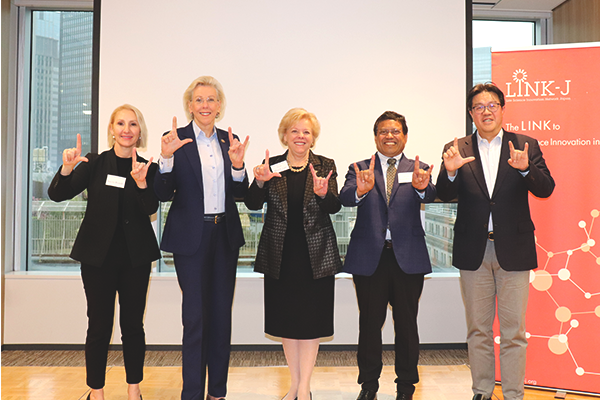
















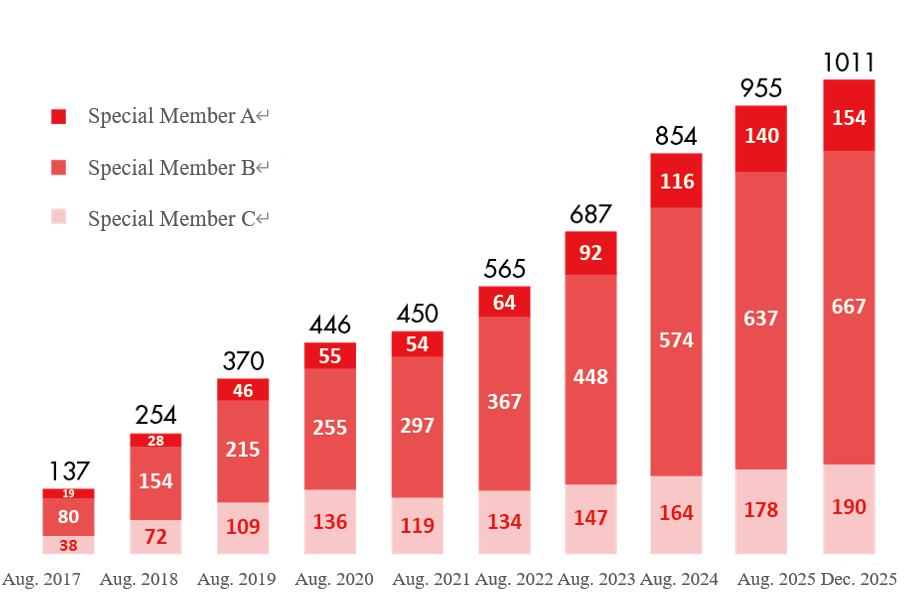
Tokyo, Japan, January 7, 2026 - Mitsui Fudosan Co., Ltd., a leading global real estate company headquartered in Tokyo, and Life Science Innovation Network Japan Inc., a general incorporated association also based in Tokyo (hereafter, “LINK-J”), announced today that the number of special members at LINK-J surpassed 1,000 as of December 31, 2025.
LINK-J was established in March 2016 by Mitsui Fudosan and volunteers from academia and industry. With its base in the Nihonbashi, Tokyo area, LINK-J’s purpose is to promote open innovation in life sciences through industry-government-academia partnerships and support the creation of new industry. From the Edo period (1603-1868) to the present day, Nihonbashi has been known as a “neighborhood of medicine,” an area where pharmaceutical companies have clustered and life sciences knowledge has converged. Leveraging this historical background and geographic advantage, LINK-J is working to develop an ecosystem in the life sciences domain.
LINK-J has been fostering cooperation and interaction between industry, government, and academia, including life sciences ventures, and has been supporting the business growth of its members and their entry into overseas markets through various acceleration programs. In addition, LINK-J has been deepening its own cooperation with industry, academia, and government organizations in Japan and overseas. LINK-J has been creating internationally diverse opportunities for cooperation and interaction by building networks with partners in Japan such as Osaka Prefecture, Kanagawa Prefecture, Yokohama City, Kawasaki City, the Foundation for Biomedical Research and Innovation at Kobe, and Kyoto Research Park Corp., as well as with overseas partners, such as the Royal Danish Embassy, Tokyo, the University of California, San Diego (UCSD), the University of California, Los Angeles (UCLA), Biocom California (a life sciences cluster on the U.S. West Coast), and MedCity (an organization established under the leadership of the Mayor of London to promote industrialization in the life sciences field). In terms of physical infrastructure, LINK-J has expanded its footprint in Japan through sites such as the Life Sciences Building series in Tokyo and Osaka and the MITSUI LINK-Lab series, and overseas by establishing member-accessible lounges and satellite offices in New York and Boston in the U.S., thereby putting in place a framework to support member companies’ activities both in Japan and overseas. Furthermore, LINK-J is also focusing on developing a domestic ecosystem that supports members seeking to enter overseas markets, as highlighted by its selection as a promoter for a Tokyo Metropolitan Government startup support project.
Through these diverse initiatives, LINK-J has grown into a platform that brings together not only life sciences players, but also organizations across a wide range of other fields, including startups, pharmaceutical companies, and companies from different industries, as well as non-profit organizations, academia, public institutions such as local governments and embassies, and venture capital firms and accelerators. As a result, the number of special members at LINK-J has now surpassed 1,000, combining companies, organizations, and individuals. Going forward, LINK-J remains strongly committed to contributing further to the development of Japan’s life sciences ecosystem and the creation of innovation.
 | .png) |
Membership trend | Membership composition |
New Initiatives in Recent Years
1. Holding Large Conferences Bringing Together R&D Division Leaders from Major Pharmaceutical Companies in Japan
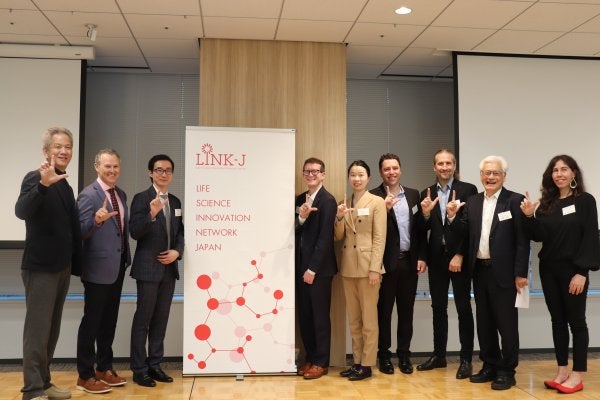
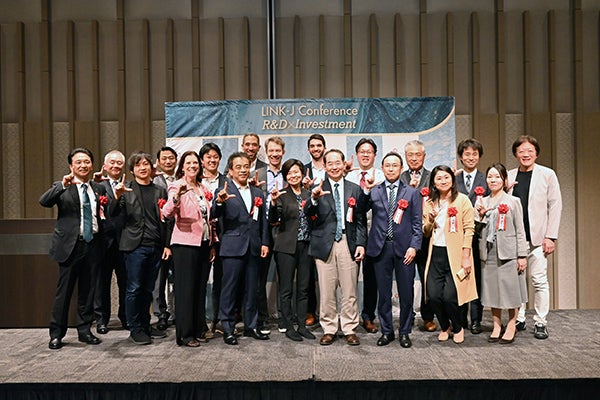
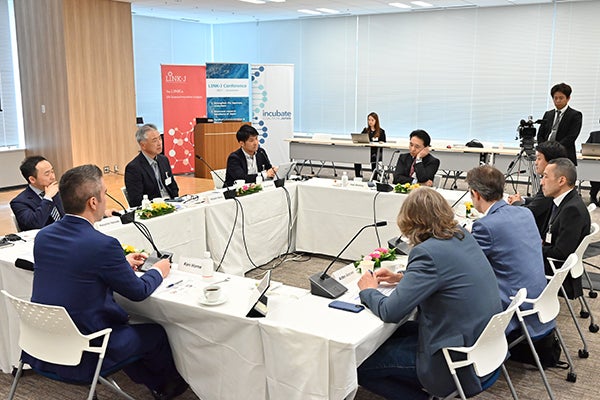
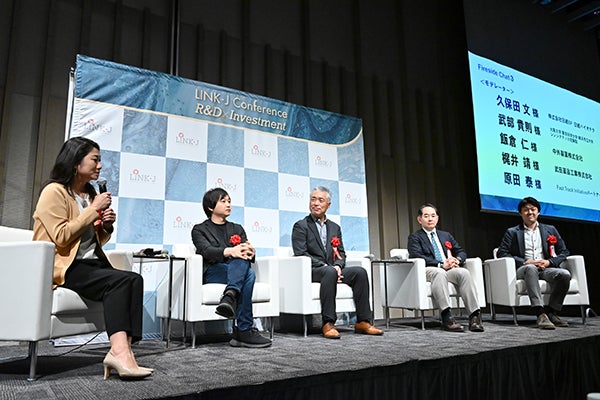
Since 2024, LINK-J has held the LINK-J Conference -R&D×Investment- as a new event. The conference provides a forum for pharmaceutical companies, researchers, and venture capital firms to engage in discussions and interact with startups, beginning with lectures on research strategies delivered by the R&D division leaders of major pharmaceutical companies in Japan. Through these activities, LINK-J supports the development of a Japan-led drug discovery ecosystem and the creation of innovation.
 |  |  |
2. Opening of BioLabs Tokyo, an Incubation Site Operated by U.S.-based BioLabs
LINK-J, together with BioLabs and Mitsui Fudosan, was selected for TIB CATAPULT (Global Cluster Creation Project), which was conducted by the Tokyo Metropolitan Government in September 2024. Through a collaboration among three parties with proven track records in Japan and the U.S., LINK-J started the operation of LINK-BioBAY TOKYO, a startup incubation cluster in the life sciences domain in Shinkiba and Nihonbashi, Tokyo. In spring 2026, the incubation site BioLabs Tokyo, operated by BioLabs, will open at MITSUI LINK-Lab SHINKIBA 2. Through these initiatives, LINK-J is promoting global startup growth and strengthening their connections with overseas ecosystems.
3. Developing Sites
In developing sites that serve as a foundation for activities, LINK-J, together with Mitsui Fudosan, has expanded locations in the Nihonbashi Life Science Building series, and promoted the opening of MITSUI LINK-Lab sites, thereby creating an environment where diverse players can come together. In addition, LINK-J signed a memorandum of understanding with Osaka Prefecture on mutual partnership in the life sciences domain and is expanding the sites of its activities in the Kansai region. These efforts involve establishing LINK-J sites in Doshomachi, Osaka and at the International Center for Future Medicine in Nakanoshima, Osaka.
About Life Science Innovation Network Japan Inc. (LINK-J)
LINK-J is a general incorporated association established by Mitsui Fudosan and volunteers from academia and industry. Based in the Nihonbashi, Tokyo area, which has a cluster of pharmaceutical companies, LINK-J’s purpose is to promote open innovation in life sciences through industry-government-academia partnerships and support the creation of new industry. It will promote internal and external personal interactions and technology exchanges beyond any specific field in the life science domain, which is a composite of all the sciences, including medicine, physical science, engineering, ICT, artificial intelligence, and other new technologies. (https://www.link-j.org/en/)