














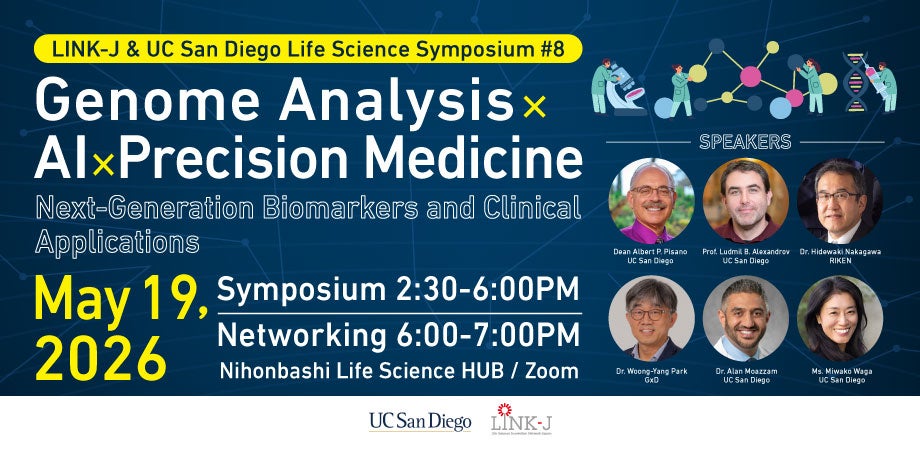
LINK-J & UC San Diego Life Science Symposium #8
Recent advances in next-generation sequencing technologies have enabled the acquisition of human genomic information with unprecedented speed and accuracy. At the same time, rapid progress in artificial intelligence (AI) and machine learning has dramatically enhanced our ability to analyze large-scale and complex genomic datasets. The convergence of these technologies is driving a paradigm shift in medicine—from standardized approaches to truly personalized, precision medicine.
This symposium will explore how the integration of genome analysis and AI is transforming diagnostics, therapeutics, and drug discovery. Through discussions of cutting-edge research and real-world applications, we will present a comprehensive view of data-driven medicine, spanning disease risk prediction, early detection, optimal treatment selection, and the identification of novel therapeutic targets. Particular emphasis will be placed on how the integration of big data analytics, machine learning, and molecular profiling is accelerating the translation of research findings into clinical practice, especially in complex diseases such as cancer.
The keynote lecture will be delivered by Prof. Ludmil B. Alexandrov from University of California San Diego, a leading authority in mutational signature analysis. Prof. Alexandrov has pioneered innovative approaches to systematically decipher mutational signatures embedded in cancer genomes, enabling the identification of underlying disease-causing processes such as DNA damage, repair deficiencies, and environmental exposures. More recently, his work leverages advanced computational methods and AI to extract subtle mutational patterns from large-scale genomic data, opening new avenues for biomarker discovery directly linked to diagnosis and therapeutic decision-making.
In addition, Dr. Hidewaki Nakagawa, Team Director of the Cancer Genomics Research Team at the RIKEN Center for Integrative Medical Sciences, will present the current status and future perspectives of large-scale genomic research and its clinical implementation in Japan.
Dr. Woong-Yang Park, Chair of GxD, will discuss innovations in personalized therapeutics and the transformation of drug discovery driven by genomic and data-centric approaches.
As a second speaker from University of California San Diego, we will welcome Dr. Alan Moazzam, an internal medicine physician with expertise in the U.S. healthcare and reimbursement systems. Dr. Moazzam also teaches medical students on topics such as insurance and reimbursement frameworks. His talk will provide valuable strategic perspectives on how innovations—such as the use of genomic biomarkers in precision medicine—can be successfully implemented in real-world clinical settings.
By bringing together experts from academia, research institutions, and industry, this symposium aims to share a forward-looking vision of precision medicine powered by genomics and AI. It will also serve as a platform to foster interdisciplinary collaboration and catalyze innovation across sectors.
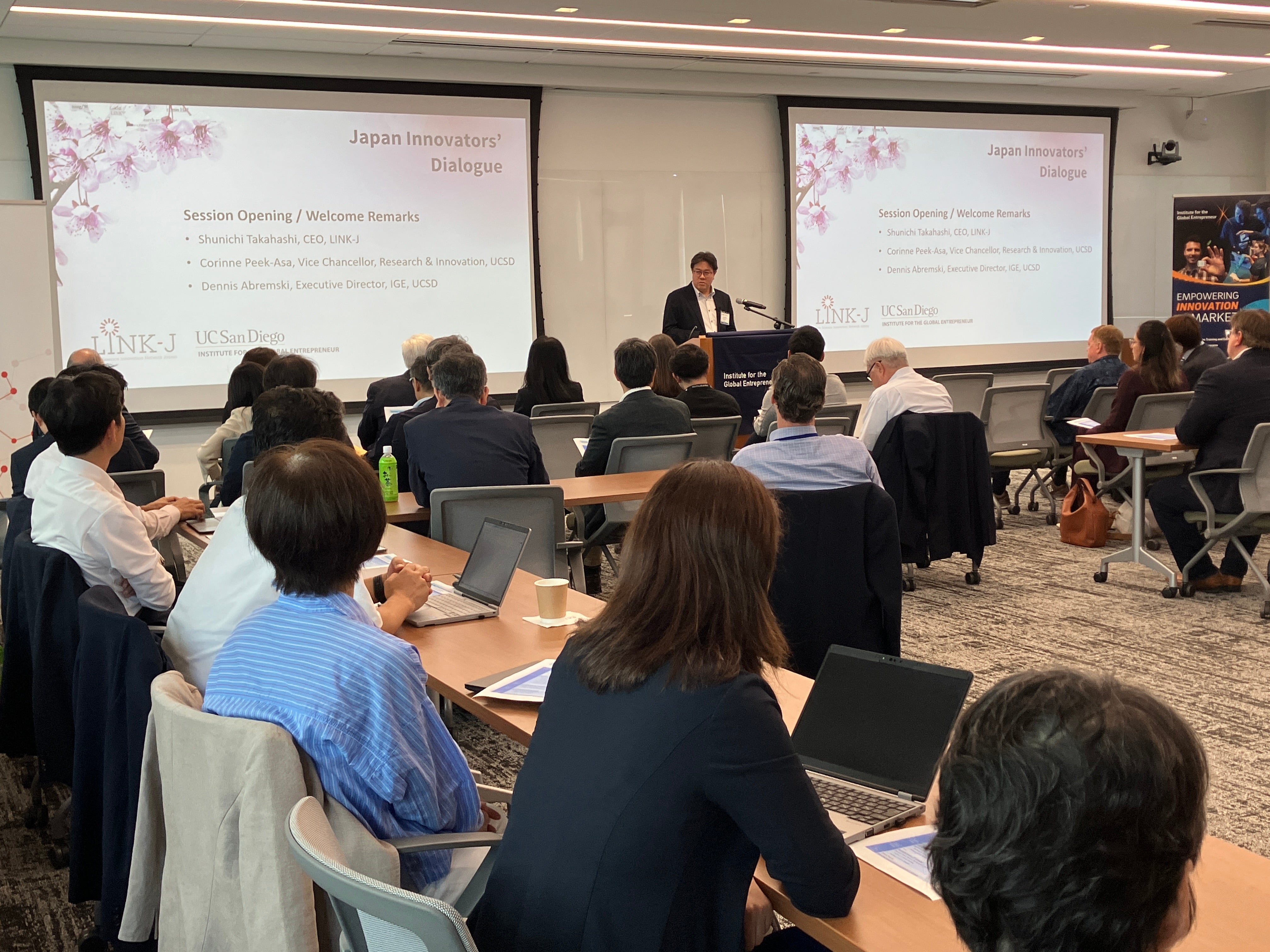
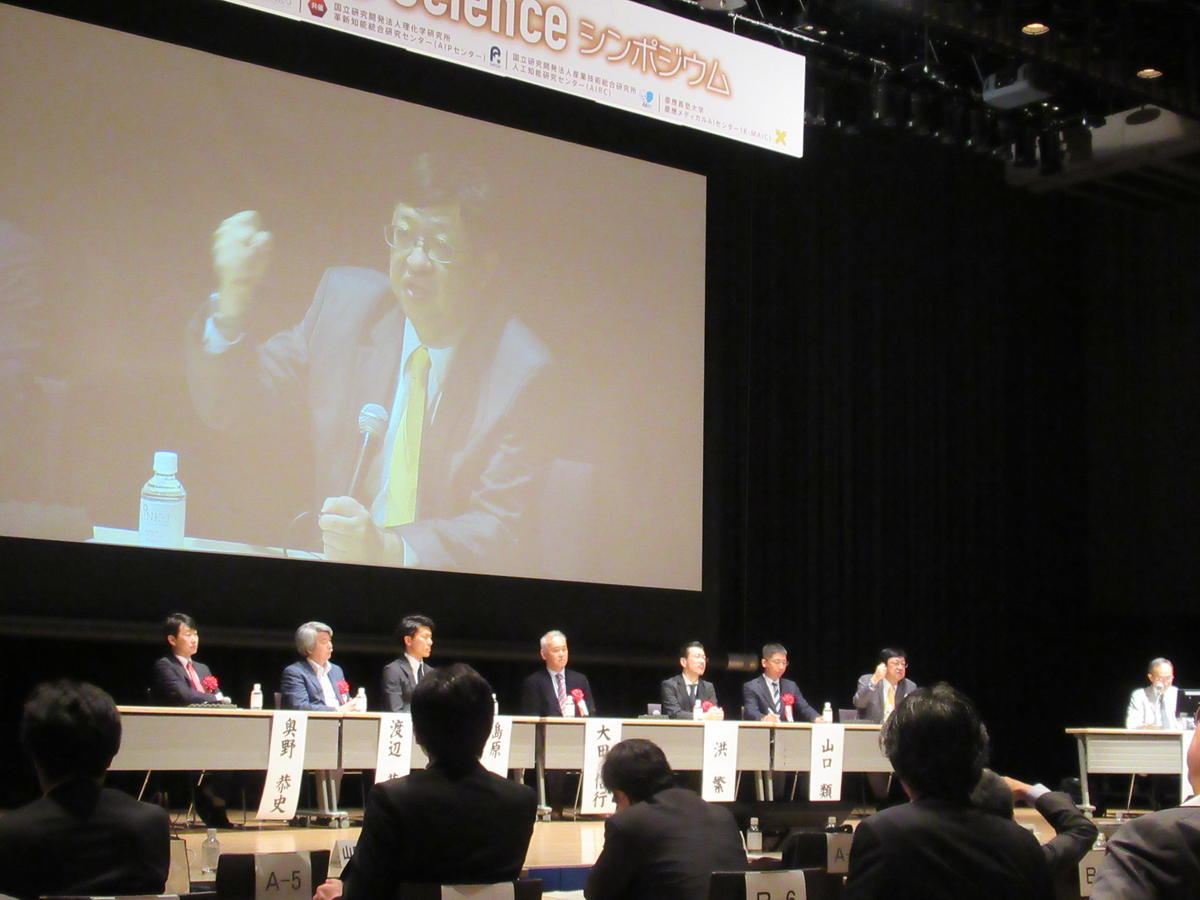
Life Science Innovation Network Japan has hosted Special Symposiums on life science-related topics in Tokyo in partnership with UC San Diego since 2018. The symposiums invite academic and industry leaders to discuss the advances in the topical fields and provide the audience with opportunities to learn about the frontiers of research and their implications for translational work. We have hosted symposiums on microbiome, systems biology, nano medicine, and bio-manufacturing. For this eighth symposium, we will focus on “Genome Analysis x AI x Precision Medicine.”
For past UC San Diego-related events and reports, please click here.
*Language:English /Partialy Japanese (English-Japanese simultaneous interpretation available)
*English captions are available (you can choose to turn them on or off).
*Please note that LINK-J and UC San Diego are not responsible for any errors or omissions in the captions.
How to use captions: Managing and viewing closed captioning
Date: 2:30PM - 7:00PM (2:15 Doors open, 6:00- Networking), Tue, May 19th, 2026
On-site: Nihonbashi Life Science HUB
Online: Zoom Webinar
(Opens an external site)
Registration due date
On-site: Until noon, Monday, May 18th, 2026
Online: Until 6:00PM, Tuesday, May 19th, 2026
Payment for advance registration is accepted by credit card only.
For inquiries regarding payment, please contact the LINK-J Secretariat at contact@link-j.org.
Receipts can be downloaded from My Page.
Program
| Time | Agenda |
| 2:15 PM | Doors open |
| 2:30-2:40 | Opening remarks Dr. Shunichi Takahashi, Ph.D. (Chief Executive Officer, LINK-J / Visiting Professor, University of Tsukuba) Dean Albert P. Pisano (Dean and Distinguished Professor, Jacobs School of Engineering / Special Advisor to the Chancellor, University of California San Diego) |
| 2:40-3:25 | Keynote presentation "Genome Analysis and AI for Cancer Prevention and Precision Medicine" Prof. Ludmil B. Alexandrov, Ph.D. (Professor, Department of Cellular and Molecular Medicine and Shu Chien-Gene Lay Department of Bioengineering, UC San Diego) |
| 3:25-3:55 | Presentation "Advanced Immuno-Genomics and AI for Cancer Precision Medicine" Dr. Hidewaki Nakagawa (Team Director, RIKEN) |
| 3:55-4:05 | Break |
| 4:05-4:35 | Presentation "IntelliMed: An AI-Powered Multi-Omics Platform for Smarter Drug Discovery and Clinical Development" Dr. Woong-Yang Park, MD, PhD (Chair, GxD) |
| 4:35-5:05 | Presentation Dr. Alan Moazzam, MD, MBA, FACP(Health Sciences Assistant Clinical Professor, Division of Hospital Medicine & Advisor to the Institute for the Global Entrepreneur (IGE), UC San Diego) |
| 5:05-5:20 | Break |
| 5:20-5:50 | Panel discussion Moderator: Dean Albert P. Pisano (Dean and Distinguished Professor, Jacobs School of Engineering / Special Advisor to the Chancellor, University of California San Diego) Panelists: Speakers |
| 5:50-5:55 | Closing remarks Dr. Ikuo Hayashi, Ph.D., MBA, R.Ph. (President & COO, LINK-J) Ms. Miwako Waga (Senior Director for International Innovation Outreach, Office of Research and Innovation, UC San Diego) |
| 6:00-7:00 | Networking *In-person only |
*Speakers and presentation titles are subject to change without notice.
Speakers
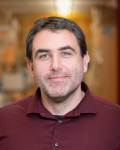 | Prof. Ludmil B. Alexandrov, Ph.D. Professor, Department of Cellular and Molecular Medicine and Shu Chien-Gene Lay Department of Bioengineering, UC San Diego Ludmil B. Alexandrov, PhD, is a Professor of Bioengineering and Cellular & Molecular Medicine at the University of California San Diego. He is internationally recognized for founding the field of mutational signatures and establishing a quantitative framework to decode the biological, environmental, and endogenous processes that shape cancer genomes. His work transformed cancer genomics from descriptive cataloging into a mechanistic science capable of identifying the causes of cancer directly from DNA. Dr. Alexandrov’s research has uncovered major environmental and microbial drivers of human cancer, including demonstrating the mutagenic role of air pollution in lung cancer among never-smokers and identifying colibactin as a likely contributor to the global rise in early-onset colorectal cancer. More broadly, his work bridges genomics and artificial intelligence to enable cancer risk stratification, early detection, and precision treatment strategies. He has authored over 160 peer-reviewed publications, including over 30 papers in Nature, Science, and Cell, and has been recognized annually since 2019 as a Clarivate Highly Cited Researcher. He is an elected Fellow of the American Institute for Medical and Biological Engineering (AIMBE). |
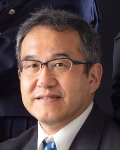 | Dr. Hidewaki Nakagawa Team Director, RIKEN Dr. Nakagawa graduated from Osaka University School of Medicine and completed training in clinical oncology of GI cancers as a surgeon. After obtaining his PhD, he had postdoctoral training (1999-2003) for cancer genomics and hereditary cancers at the Human Cancer Genetics Program, The Ohio State University, USA. In 2003, he returned to Japan as an assistant professor at The University of Tokyo, Institute of Medical Science, where he was dedicated to therapeutic target screening for cancers. In 2008, he moved to RIKEN as a team leader of genomic medicine and his recent research has been focusing on cancer hereditability and cancer genomics by whole genome sequencing for liver cancer, GI cancers, and urological cancers. He has been working for international large-scale cancer genome sequencing project as PIs of PCAWG of ICGC/TCGA. He is now interested in precision cancer medicine and cancer immuno-genomics by single-cell and ST technologies. He has been also dedicated with GA4GH for global data sharing and national medical funding system as a program officer of AMED. |
.png) | Dr. Woong-Yang Park, MD, PhD Chair, GxD IntelliMed is an AI-powered drug discovery platform designed to help pharmaceutical companies identify high-value therapeutic targets, discover predictive biomarkers, and optimize clinical development strategies. By integrating clinically annotated genomics, single-cell and spatial omics, pathology, and treatment-response data, IntelliMed provides a comprehensive framework to understand disease biology in real clinical contexts. The platform is particularly powerful for revealing tumor–microenvironment interactions, target expression patterns, resistance mechanisms, and patient subgroups most likely to benefit from specific therapies. Built for translational and clinical applications, IntelliMed supports target prioritization, biomarker hypothesis generation, patient stratification, and indication expansion across oncology programs, including targeted therapies, immuno-oncology, and ADC development. Its AI-driven analytics enable pharma partners to move beyond descriptive data analysis toward actionable decision-making grounded in human clinical samples. By combining advanced multi-omics interpretation with scalable computational models, IntelliMed aims to reduce development risk, improve trial success rates, and accelerate the delivery of precision medicines to patients. |
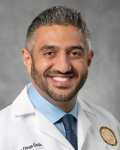 | Dr. Alan Moazzam, MD, MBA, FACP Alan Moazzam MD MBA FACP is a board-certified internal medicine physician who specializes in caring for hospitalized patients. Dr. Moazzam completed his residency in internal medicine at USC Los Angeles County Hospital. He earned his medical degree at Saint Louis University, in St. Louis, MO and his Bachelor’s degree in Biochemistry from UCSD. He currently serves as a Health Sciences Assistant Clinical Professor with the Division of Hospital Medicine at UCSD. He is Chair of the Physician Steering Committee for the Institute of Healthcare Engineering at Jacobs School of Engineering. He is a clinical mentor and advisor to the Institute for the Global Entrepreneur (IGE) at UCSD, where he advises teams wanting to commercialize their medical technology inventions. He is a Physician Affiliate to the Jacobs Center for Healthcare Innovation, where he works with researchers to develop AI-based clinical support tools and GenAI innovations for UCSD healthcare ecosystem. His research interests include anti-circadian night shift work and its effects on human physiology. He is a member of UCSD's Center for Circadian Biology. Dr. Moazzam is a Fellow of the American College of Physicians and a member of the Society of Hospital Medicine. |
Presentation summary
Prof. Alexandrov
The integration of genomics and artificial intelligence is transforming how we understand, prevent, and diagnose cancer. In this talk, I will present a unified framework combining large-scale data and machine learning to address both public health and clinical challenges.
First, I will describe our work applying machine learning to large-scale cancer genomics to investigate the rise of early-onset colorectal cancer. Analyses of whole-genome data across 11 countries reveal geographic and age-related mutational patterns, including evidence for early-life exposures such as colibactin, informing risk stratification and opportunities for early intervention at the population level, including in Japan.
Second, I will show how AI can predict treatment response directly from routine histopathology images, enabling AI-based diagnostics that can complement or, in some cases, replace molecular testing in a more cost-effective and scalable manner, while guiding therapy selection.
Together, these examples illustrate how genomics and AI can bridge discovery and clinical implementation in precision oncology.
Dr. Park
IntelliMed is an AI-powered drug discovery platform designed to help pharmaceutical companies identify high-value therapeutic targets, discover predictive biomarkers, and optimize clinical development strategies. By integrating clinically annotated genomics, single-cell and spatial omics, pathology, and treatment-response data, IntelliMed provides a comprehensive framework to understand disease biology in real clinical contexts. The platform is particularly powerful for revealing tumor–microenvironment interactions, target expression patterns, resistance mechanisms, and patient subgroups most likely to benefit from specific therapies. Built for translational and clinical applications, IntelliMed supports target prioritization, biomarker hypothesis generation, patient stratification, and indication expansion across oncology programs, including targeted therapies, immuno-oncology, and ADC development. Its AI-driven analytics enable pharma partners to move beyond descriptive data analysis toward actionable decision-making grounded in human clinical samples. By combining advanced multi-omics interpretation with scalable computational models, IntelliMed aims to reduce development risk, improve trial success rates, and accelerate the delivery of precision medicines to patients.
Dr. Moazzam
Bringing a new therapy, diagnostic, or digital health technology to patients in the United States is rarely limited by the science itself - it is shaped by a uniquely complex financial and regulatory architecture. In this lecture, Dr. Moazzam offers Japanese stakeholders a pragmatic map of the American healthcare system: the fragmented mix of public and private payers, how hospitals and physicians are actually paid, the coding and reimbursement pathways that determine whether an innovation reaches patients at scale, and the rising influence of value-based care. He will discuss how a clear understanding of this ecosystem equips companies to enter the US market with informed, realistic go-to-market strategies, setting the stage for the panel discussion on shortening the distance between scientific breakthrough and clinical impact.
Participation Fee
On-site: Free for LINK-J members and supporters / 2,000 JPY for non-members
* For LINK-J supporters, LINK-J members, and press, please contact LINK-J to receive a discount code.
Online: Free
Capacity
On-site: 150 people
Online: 1,000 people
Organizer
Organizer:LINK-J
Co-organizer:University of California San Diego
Contact
LINK-J
contact@link-j.org