















概要
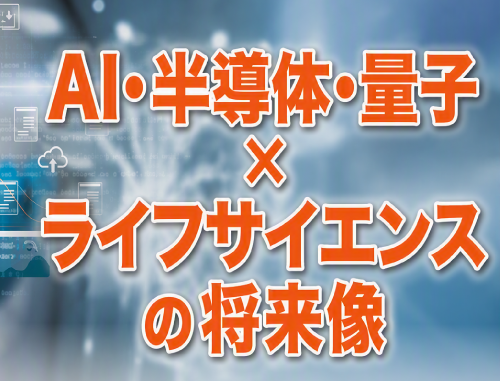
半導体の製造および集積技術の進歩は、生体信号を分子レベルでモニタリングし、それを実行可能な臨床的洞察へと変換できる新世代の医療技術を実現しつつあります。この変革の中心には、二つの収束しつつある力があります。それは、膨大な生物学的データセットから意味を抽出するAI駆動のデータ解析と、知能システムをハードウェアに直接組み込むフィジカルAIです。MITの「健康科学と半導体プログラム(HS+S)」は新たに立ち上げられた取り組みであり、固体デバイス、先進材料、低消費電力電子機器を大規模データおよびAIと組み合わせ、疾病の検出と治療の加速を目指しています。(日本語文訳:LINK-J)
Overview
Advances in semiconductor fabrication and integration are enabling a new generation of health technologies capable of monitoring biological signals at the molecular level and translating them into actionable clinical insight. Central to this transformation are two converging forces: AI-powered data analysis that extracts meaning from vast biological datasets, and physical AI that embeds intelligent systems directly in hardware. The MIT Program for Health Sciences and Semiconductors (HS+S) is a newly launched MIT initiative focused on how solid-state devices, advanced materials, and low-power electronics can be combined with large-scale data and AI to accelerate disease detection and treatment.
この東京で開催される半日のイベントでは、単一分子バイオセンシングのための固体ナノポア、CMOS互換の検出プラットフォーム、さらにマイクロ流体工学・電子工学・フォトニクスを統合したハイブリッドシステムといった研究が紹介される予定です。さらに、産業界のリーダーによるパネルディスカッションでは、堅牢性、拡張性、そして臨床レベルの性能を念頭に設計された技術が、研究段階のプロトタイプから実用的な医療ソリューションへとどのように移行していくのかが議論されます。(日本語文訳:LINK-J)
This half-day event in Tokyo will highlight research such as solid-state nanopores for single‑molecule biosensing, CMOS‑compatible detection platforms, and hybrid systems that integrate microfluidics, electronics, and photonics. A panel discussion with industry leaders will examine how technologies designed for robustness, scalability, and clinical-grade performance can move from research prototypes to deployable health solutions.
参加費:
- 一般:20,000円
- ILP会員:無料
- LINK-J特別会員:無料
- RISE-A特別会員:無料
このイベントは対面形式で開催します。MIT ILPイベントページよりお申し込みの上、お越しください。
Please note that this event is an in-person event, and by registering, you are confirming your intention to join us physically.
使用言語:英語
※同時通訳あり
プログラム
| 日本時間 | 内容 |
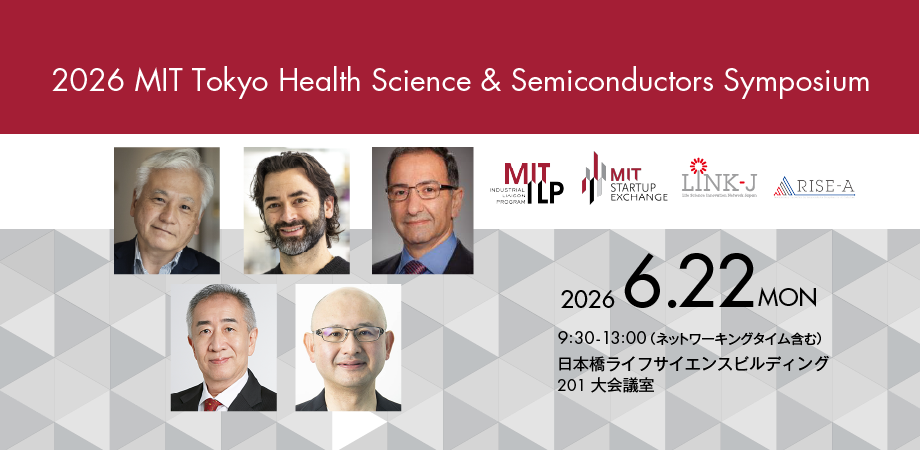
| 9:30-9:35 | Welcome and Introduction Miki Kato Program Director, MIT Industrial Liaison Program |
| 9:35-9:40 | LINK-J Opening Remarks Yoshinori Kiuchi General Manager, LINK-J/Project Manager, Mitsui Fudosan Co., Ltd. |
| 9:40-9:45 | RISE-A Opening Remarks Kiyoshi Nakazawa President & Chief Operating Officer, RISE-A |
| 9:45-10:15 | 講演1 The MIT HS+S Initiative: Advancing Health at the Intersection of AI and Semiconductors Alex K. Shalek Director, Institute for Medical Engineering & Science (IMES)/J. W. Kieckhefer Professor, MIT Department of Chemistry Extramural Member, The Koch Institute for Integrative Cancer Research at MIT |
| 10:15-11:00 | 講演2 CMOS-Integrated Solid-State Nanopores for AI-Driven Molecular Sensing Ahmad Bahai Senior Vice President and CTO, Texas Instruments/Professor of the Practice, MIT Electrical Engineering Computer Science Department (EECS) |
| 11:00-11:15 | Break |
| 11:15-12:00 | Panel Discussion: Moderator: Miki Kato, Program Director, MIT Industrial Liaison Program Panelists: Hiroshi Shiragami, Director and Member of the Board, Ajinomoto Co./Visiting Professor, Tohoku University Yasuyuki Sato, President and CEO, Medcom, Inc. Alex K. Shalek, Director, Institute for Medical Engineering & Science (IMES)/J. W. Kieckhefer Professor, MIT Department of Chemistry/Extramural Member, The Koch Institute for Integrative Cancer Research at MIT Ahmad Bahai, Senior Vice President and CTO, Texas Instruments/Professor of the Practice, MIT Electrical Engineering Computer Science Department (EECS) |
| 12:00-13:00 | Lunch and Networking |
登壇者略歴
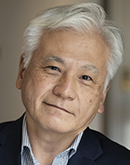 | Miki Kato Prior to joining the ILP, Kato worked at FUJIFILM Corporation for 40 years in various new business development sectors. He was President of FUJIFILM Pharmaceuticals U.S.A., Inc., conducting the clinical trials of FUJIFILM pipeline drugs and leading the joint research project in drug delivery with MIT’s Koch Institute. During his tenure, he also collaborated with the Department of Electrical Engineering at MIT for digital camera’s CMOS image sensors and the Department of Materials Sciences and Engineering for high-speed photodetectors. Kato has presented at several conferences at the Cambridge Innovation Center, including the 2018 Japan Innovation Forum with the Consulate General of Japan and the 60th-anniversary Kyoto-Boston sister city celebration Life Science Forum (2019) with the City of Boston, the Japan Society of Boston, and the Consulate General of Japan. He holds an M.E. in Polymer Chemistry from Kyoto University and an M.S. in Management of Technology from MIT. |
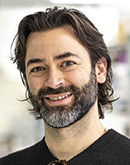 | Alex K. Shalek Director, Institute for Medical Engineering & Science (IMES)/J. W. Kieckhefer Professor, MIT Department of Chemistry Extramural Member, The Koch Institute for Integrative Cancer Research at MIT Alex K. Shalek, PhD, is the Director of the Institute for Medical Engineering & Science (IMES), the J. W. Kieckhefer Professor in the Department of Chemistry, and an Extramural Member of The Koch Institute for Integrative Cancer Research at MIT. He is also an Institute Member of the Broad Institute, a Member of the Ragon Institute, an Assistant in Immunology at MGB, and an Instructor in Health Sciences & Technology at HMS. Dr. Shalek received his bachelor's degree summa cum laude from Columbia University and his Ph.D. from Harvard University in chemical physics under the guidance of Hongkun Park, and performed postdoctoral training under Hongkun Park and Aviv Regev (Broad/MIT). His lab’s research is directed towards the development and application of new approaches to elucidate cellular and molecular features that inform tissue-level function and dysfunction across the spectrum of human health and disease. Dr. Shalek and his work have received numerous honors including a NIH New Innovator Award, a Beckman Young Investigator Award, a Searle Scholar Award, a Pew-Stewart Scholar Award, the Avant-Garde (DP1 Pioneer) Award from the National Institute for Drug Abuse (NIDA), and an Alfred P. Sloan Research Fellowship in Chemistry, as well as the 2019-2020 Harold E. Edgerton Faculty Achievement Award at MIT and the 2020 HMS Young Mentor Award. |
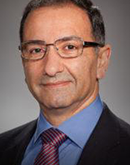 | Ahmad Bahai Dr. Bahai is a Professor of the Practice at MIT, an IEEE Fellow, and a member of the US Department of Commerce’s Industrial Advisory Committee related to the CHIPS for America Act. He was an adjunct professor at Stanford University from 2017 to 2022 and a professor in residence at the University of California, Berkeley from 2001 to 2010. Throughout his career, Dr. Bahai has held a number of leadership roles, including director of research labs and chief technology officer of National Semiconductor, technical manager of a research group at Bell Laboratories, and founder of Algorex, a communication and acoustic IC and system company that was acquired by National Semiconductor. He holds a Master of Science in Electrical Engineering from Imperial College, University of London and a doctoral degree in Electrical Engineering from UC Berkeley. |
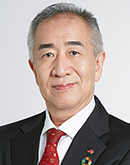 | Hiroshi Shiragami Director and Member of the Board, Ajinomoto Co./Visiting Professor, Tohoku University Dr. Hiroshi Shiragami is a Director and Member of the Board of Ajinomoto Co., Inc. He previously served as Representative Executive Officer & Executive Vice President and Chief Innovation Officer (CIO), overseeing company-wide innovation and research and development. He has led global R&D initiatives in bioscience products, fine chemicals, and the company & rsquo;s AminoScience business, and served as Board Chairman and Managing Director of Ajinomoto Althea, Inc. After joining Ajinomoto Co., Inc. in 1986, he held several senior leadership roles, including Corporate Fellow and General Manager of the Material & Technology Solution Labs., and Corporate Vice President and Deputy General Manager of the AminoScience Division while leading the Research Institute for Bioscience Products & Fine Chemicals. He received a Doctor of Engineering from Kyoto University and has been a Visiting Professor at Tohoku University since 2021. He received the Technological Progress Award from the Chemical Society of Japan in 1998 and was born in Kyoto Prefecture, Japan. |
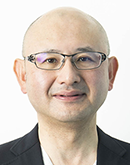 | Yasuyuki Sato Prior to founding Medcom, Mr. Sato built an extensive career at NTT and NTT DOCOMO, where he led initiatives in mobile and digital service design. He later served as Head of Healthcare Information Services at Nihon Ultmarc INC., overseeing healthcare information businesses and further deepening his expertise in data‑driven healthcare. With a cross‑disciplinary background spanning telecommunications, healthcare, and information systems, Mr. Sato founded Medcom to address structural challenges in healthcare delivery. He brings a systems‑level perspective to the development of healthcare innovation ecosystems, working across industry and medical institutions to support the digital transformation of healthcare in Japan and beyond. |
| Yoshinori Kiuchi General Manager, LINK-J/Project Manager, Mitsui Fudosan Co., Ltd. | |
| Kiyoshi Nakazawa President & Chief Operating Officer, RISE-A |
Abstract
Alex K. Shalek
"The MIT HS+S Initiative: Advancing Health at the Intersection of AI and Semiconductors"
Recent advances in the detection & analysis of physiological signals promise transformative opportunities for human health & wellness. At MIT, our community is actively inventing accurate, powerful approaches to achieve these goals using optical, electrical, and chemical sensors, collecting data from the nano to the human scale and using cutting-edge AI/ML methods to turn raw data into actionable information. In my talk, I will introduce the recently launched MIT Program for Health Sciences & Semiconductors (HS+S), which is uniting this community to empower innovation at the convergence of health science, artificial intelligence (AI), & semiconductor technology. I will discuss examples of how we are partnering with local hospitals & industry to foster a world-leading, full-stack collaborative toward realizing broadly applicable technologies that will pave the way toward data-driven prevention, diagnosis, & treatment of medical conditions.
Ahmad Bahai
"CMOS-Integrated Solid-State Nanopores for AI-Driven Molecular Sensing"
The convergence of innovations across health sciences, semiconductor technology, and artificial intelligence is poised to fundamentally reshape personalized healthcare. Advances in biochemistry, microelectronics, and AI have already transformed nearly every aspect of modern life; their intersection now presents a particularly compelling opportunity in health and life sciences.
Real-time monitoring of biomarkers with clinical-grade accuracy enables deeper insight into disease progression and supports more precise and timely diagnostic and therapeutic interventions. At the same time, the growing availability of large, high-quality datasets—coupled with increasingly sophisticated AI algorithms—creates new pathways for understanding disease mechanisms at the molecular level.
A notable example of this convergence is the use of solid-state nanopores for single-molecule detection. Nanopore technologies are driving a new generation of biosensing and sequencing platforms. Unlike biological nanopores, solid-state nanopores are fabricated in materials such as silicon nitride membranes using advanced lithographic techniques, offering superior robustness and design flexibility. Their higher signal-to-noise ratio (SNR), along with compatibility with CMOS integration, is critical for scalable, high-throughput implementations.
Key technical challenges remain, including improving the consistency of pores and the controlled slowdown of molecular translocation to improve detection resolution. Addressing these challenges, along with seamless integration with CMOS, will enable increasingly complex systems that combine microfluidic, electronic, and photonic components. Emerging architecture which incorporates photonic waveguides to enhance sensitivity—illustrate the potential of these hybrid platforms to significantly advance next-generation biosensing technologies.
参加費
- 一般:20,000円
- ILP会員:無料
- LINK-J会員:無料
- RISE-A会員:無料
定員
100名
主催
主催:MIT Office of Corporate Relations
共催:一般社団法人LINK-J、一般社団法人RISE-A
お問い合わせ先
LINK-J事務局 E-mail : contact@link-j.org